Slicing the Server: Hardware Virtualisation(VM) vs. OS Virtualisation(Containers)
2 min read
•January 20, 2026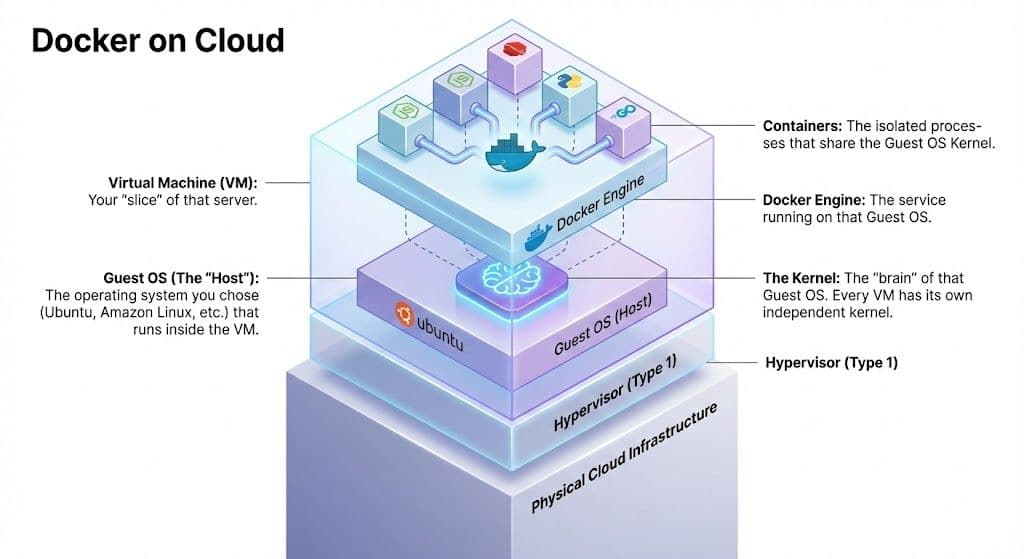
Many engineers think of Docker as a "lightweight VM," but that's an architectural oversimplification. The real difference lies in the isolation boundary.
While a Virtual Machine (VM) mimics an entire hardware set to run a unique kernel, Docker abstracts the Operating System itself to share the host's kernel.
Loading Diagram...
#Virtual Machines (Hardware Level)
- Boundary: Hypervisor.
- Architecture: Each VM contains a Full Guest OS, its own Kernel, and virtual device drivers.
- Result: Total isolation but high resource overhead (GBs of RAM/Disk just for the OS).
If you found this helpful, please like and share to support the content!
4 views
Share:
Comments (0)
Leave a comment
About MjShetty
Always curious to understand the concept, learning by breaking and fixing, and passionate about sharing knowledge with the community.Get in touch with me→